Blog

Stories, ideas, and behind-the-scenes insights from our work in 3D, CGI, and motion.

Studio Render or Lifestyle Scene: How Brands Use Both From One CGI Asset

The most frequent strategic debate in visual content planning for product brands is the question of studio imagery versus lifestyle imagery. Studio renders communicate product accuracy, material quality, and design intent with precision. Lifestyle images communicate aspiration, usage context, and emotional positioning. Both are commercially necessary. Both serve different stages of the customer journey and different performance objectives across different channels. The conventional assumption is that producing both doubles the production investment. In a photography-based content model, this is essentially true. In a CGI-based content model, it is not.

Ingredient Storytelling Through CGI: Making Formulation Visible

A consumer cannot see inside a skincare serum. They cannot observe the molecular activity of a supplement at work. They cannot watch a botanical extract being absorbed into a cellular layer. These are the mechanisms that justify a product's efficacy claim and the price point that reflects it, and they are entirely invisible to the naked eye and the camera lens alike. The most common response to this challenge in beauty and health advertising is the ingredient claim, a text statement or voiceover that asserts the presence and benefit of a specific active. This approach works, but it works less effectively than it once did. Consumers in 2026 have been saturated with ingredient claims, many of which are either overstated or contextually meaningless. A claim that a serum contains hyaluronic acid no longer generates the purchase conviction it once did, because every competing product in the category carries the same claim. What cuts through saturated ingredient claims is showing rather than saying. And CGI is the only production tool that can show what photography cannot.

How CGI Transforms Product Launches: Building Hype Before the Product Exists

A product launch is not a single event. It is a narrative arc that begins with the first signal that something new is coming and peaks with the widest possible audience simultaneously aware of, excited about, and in many cases already purchasing, the new product. The brands that execute this arc most effectively share a common approach: they use CGI to build the visual story of the product before the product exists in its final physical form, giving them campaign-ready content for every stage of the pre-launch timeline rather than scrambling to produce assets in the weeks immediately before launch day.

CGI for Packaging Design: Test Before You Print

The relationship between a product and its packaging is one of the most commercially consequential design decisions a brand makes. Packaging communicates quality, values, and desirability at the point of purchase, on the shelf, in the e-commerce product image, and in the social media unboxing moment that increasingly functions as free advertising for brands whose packaging generates genuine pride of ownership in their customers. Getting packaging design right at the first attempt is a significant commercial advantage. Getting it wrong, discovering that an embossed pattern reads too subtly, that a colour shift on the foil does not match the design intent, or that the structural proportions photograph less well than they looked in a flat design, is expensive. Print runs, revised samples, extended production timelines, and in the worst cases, already-printed inventory that needs to be recalled or discounted: these are the costs of visual surprises late in the packaging development cycle. CGI has become the standard tool for packaging development and visualisation because it eliminates visual surprises entirely. Every design decision is evaluated in photorealistic three dimensions before a single physical sample is produced.
CGI brand film still of a cream skincare bottle floating among rocks, fabric and spheres against a bright sky
CGI Brand Films: Storytelling Beyond the Product

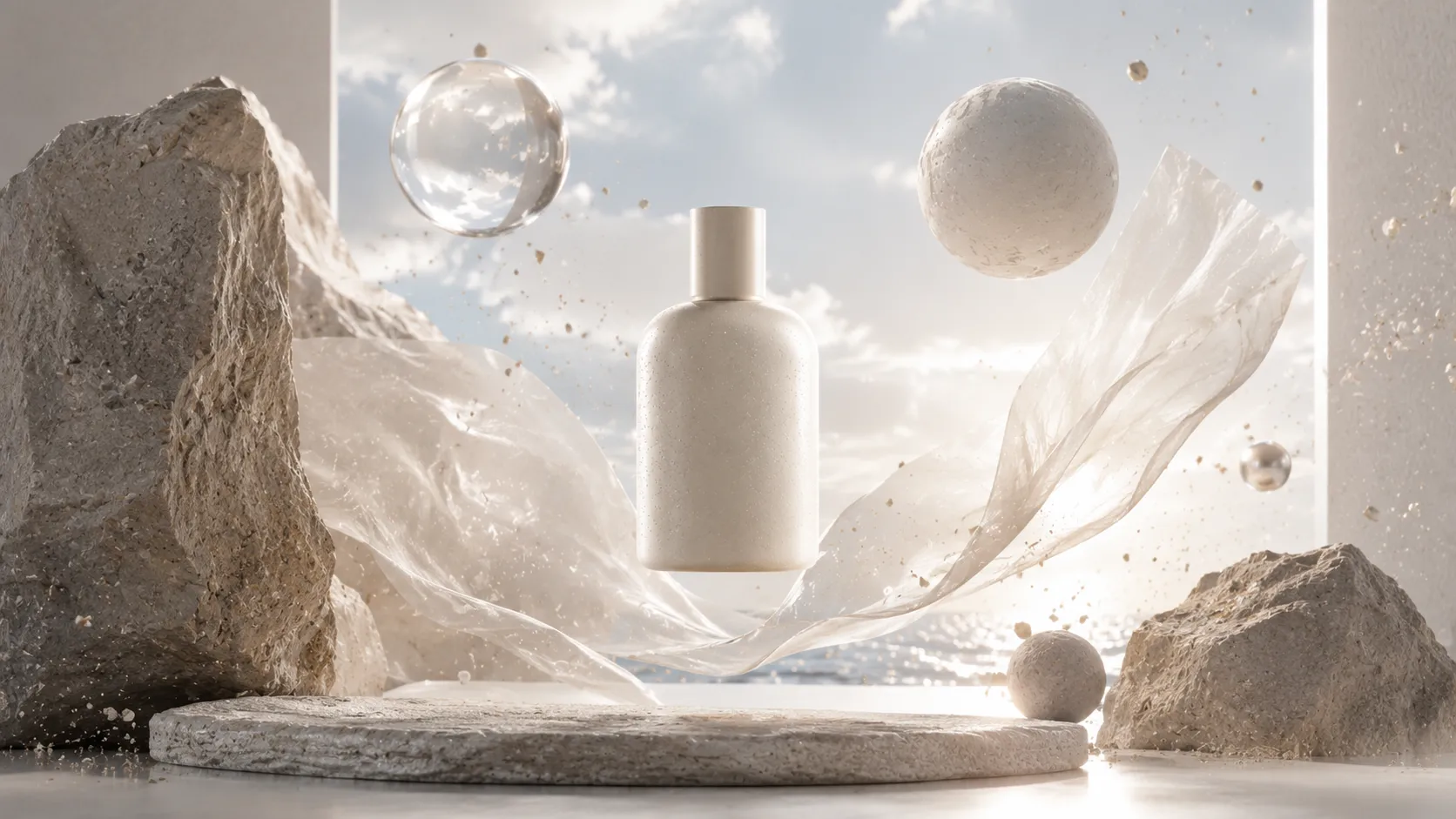
There is a category of visual content that sits above advertising in terms of its cultural reach and its long-term contribution to brand equity: the brand film. Not a product demonstration. Not a features overview. Not a campaign asset designed to drive a specific conversion action. A brand film is a piece of visual storytelling whose purpose is to communicate what a brand means, at a depth that advertising formats rarely achieve. Brand films create emotional connection before purchase intent exists. They build the kind of residual brand equity that makes every other piece of marketing work harder, because the audience arrives at a product page, a social media post, or a retail encounter already carrying a positive emotional association with the brand that preceded the commercial interaction. CGI has become the dominant production method for brand films in premium beauty, fragrance, fashion accessories, and luxury goods, because it offers something that location-based filmmaking cannot: a completely constructed visual world where every frame exists in service of the brand's story rather than in negotiation with the realities of a physical location.

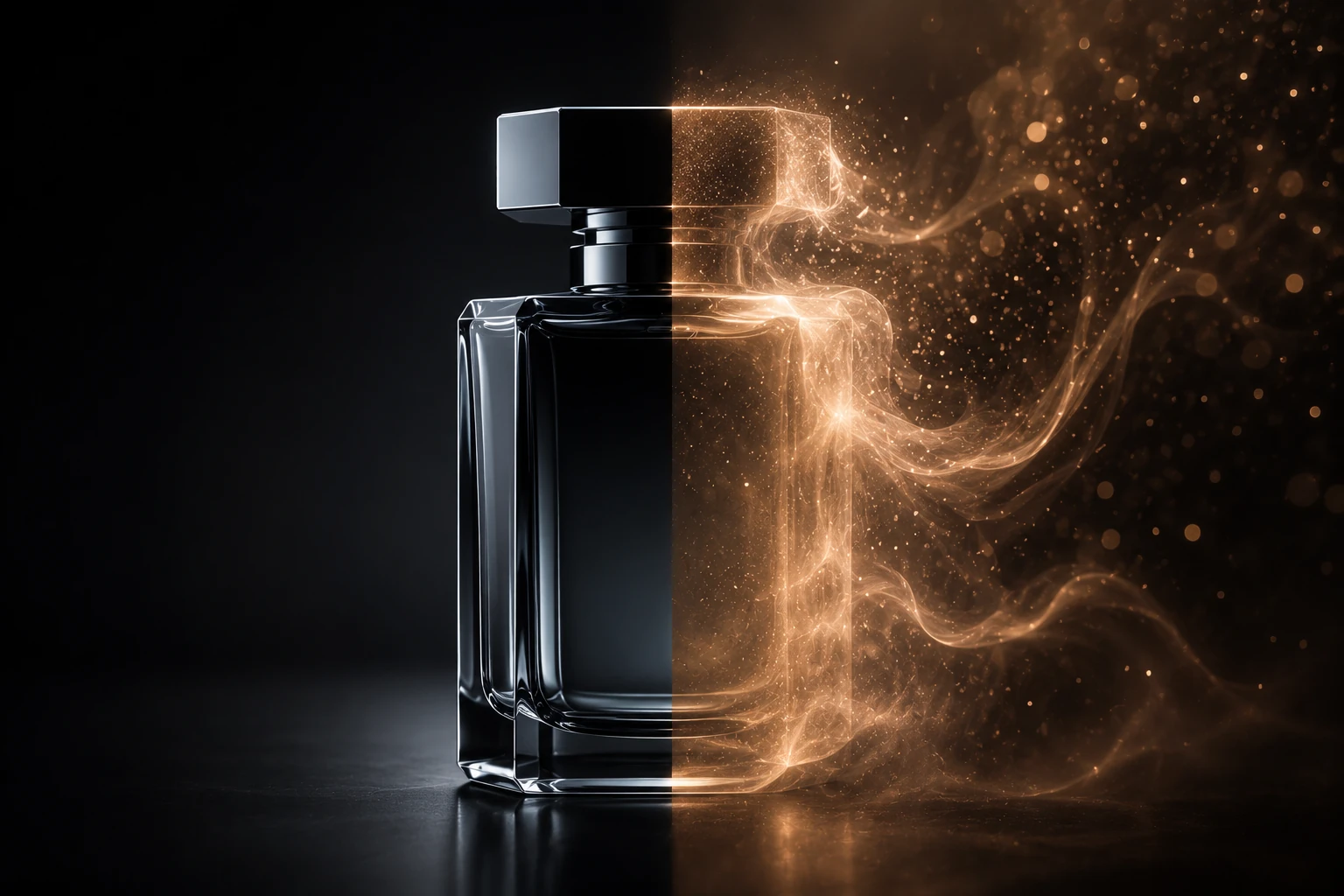
Split CGI render of one perfume bottle in two styles, cool white versus warm floral, illustrating A/B testing
Why CGI Is the Ideal Tool for Creative A/B Testing

One of the most commercially valuable and consistently underused applications of CGI in brand marketing is systematic visual A/B testing. The principle is clear: produce multiple visual variants of the same product asset, test them simultaneously against the same audience, and use the performance data to make evidence-based decisions about which creative direction to invest in at scale. The reason this approach has historically been rare in brand advertising is simple: cost. Generating meaningfully different visual variables through photography requires commissioning multiple separate shoot productions, multiplying costs to a level that most marketing budgets cannot justify for a test rather than a confirmed campaign. CGI removes this constraint entirely, making rigorous creative testing available at a fraction of the traditional cost.

CGI animation render of one lotion bottle staged across four seasonal backdrops: spring, summer, autumn and winter
CGI Content Strategy: One Product Every Season

The most expensive mistake in content production is building assets that can only be used once. A photography shoot is tied to the specific day it was produced: the light set up in the studio, the props styled on the day, the environmental context chosen for that shoot. Adapting that content for a new season, a new market, or a different campaign moment requires either expensive post-production work that can never fully achieve the effect of a new shoot, or commissioning an entirely new production.CGI operates on a fundamentally different economic model that changes the relationship between creative investment and content output entirely. A single 3D product asset, built once and approved once, is the foundation of a brand's full-year content programme. Every seasonal adaptation, platform format, and campaign moment is a new application of the same underlying asset, not a new production from scratch.

CGI architectural render of a modern clifftop luxury villa with an infinity pool overlooking the sea at sunset
CGI for Luxury Real Estate & Architecture: Sell Off-Plan

A luxury residential development is sold years before the first buyer moves in. The marketing campaign launches when the building exists only as drawings, structural calculations, and material specifications stored in engineering software. The challenge for every developer, architect, and sales team involved is the same: how do you sell a product that does not yet physically exist, to buyers making the largest financial commitment of their lives, at a price point that demands the highest possible visual communication standard? CGI is the solution the industry settled on more than a decade ago, and the standard of execution has now reached the point where the best architectural visualisation is genuinely indistinguishable from photography of the finished building under equivalent lighting conditions.

CGI render of a clear supplement capsule bottle on a travertine podium in a calm, spa-like wellness setting
CGI for Health & Wellness Brands: Building Trust

The health and wellness category presents a visual communication challenge that is specific to the sector. The product must simultaneously communicate efficacy, safety, naturalness, and premium quality, often within a single frame and without the use of unsubstantiated claims. A supplement bottle must look clinical enough to be taken seriously but not so pharmaceutical that it feels inaccessible. A skincare formulation must look scientifically advanced but also sensorial and desirable. A wellness device must look precision-engineered but also approachable and compatible with a consumer lifestyle. CGI is uniquely capable of navigating this complexity, because every visual decision is made with complete intentionality. There is no happy accident on a CGI shoot, and there is no unwanted compromise introduced by the limits of physical production.

CGI animation render of a white-and-gold poker chip, dice and playing cards on a luxe cream background for iGaming
CGI for iGaming Brands: Driving Player Acquisition

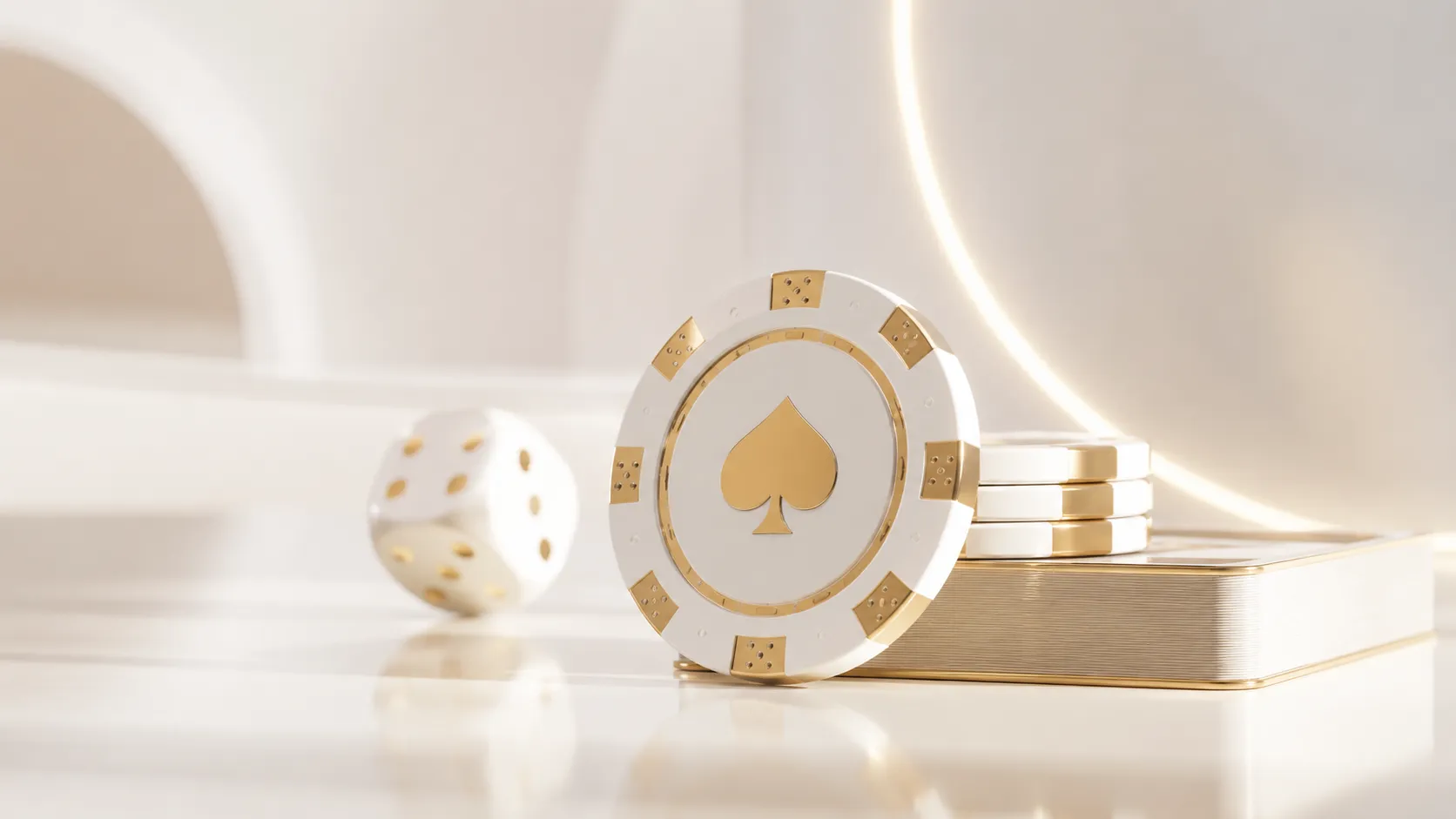
The iGaming market is one of the most competitive advertising environments in the world. Thousands of operators compete for the same players across the same digital channels, with similar product offerings, similar bonus structures, and similar platform mechanics. The brands that win in this environment are not necessarily the ones with the most generous bonuses or the largest game libraries. They are the ones whose visual identity communicates prestige, excitement, and trust more effectively than everyone else in the feed. CGI is the production method best equipped to deliver all three of those qualities simultaneously, at the speed and volume that iGaming marketing requires.

One CGI animation perfume bottle rendered across warm and cool lighting setups, showing consistent 3D product visuals
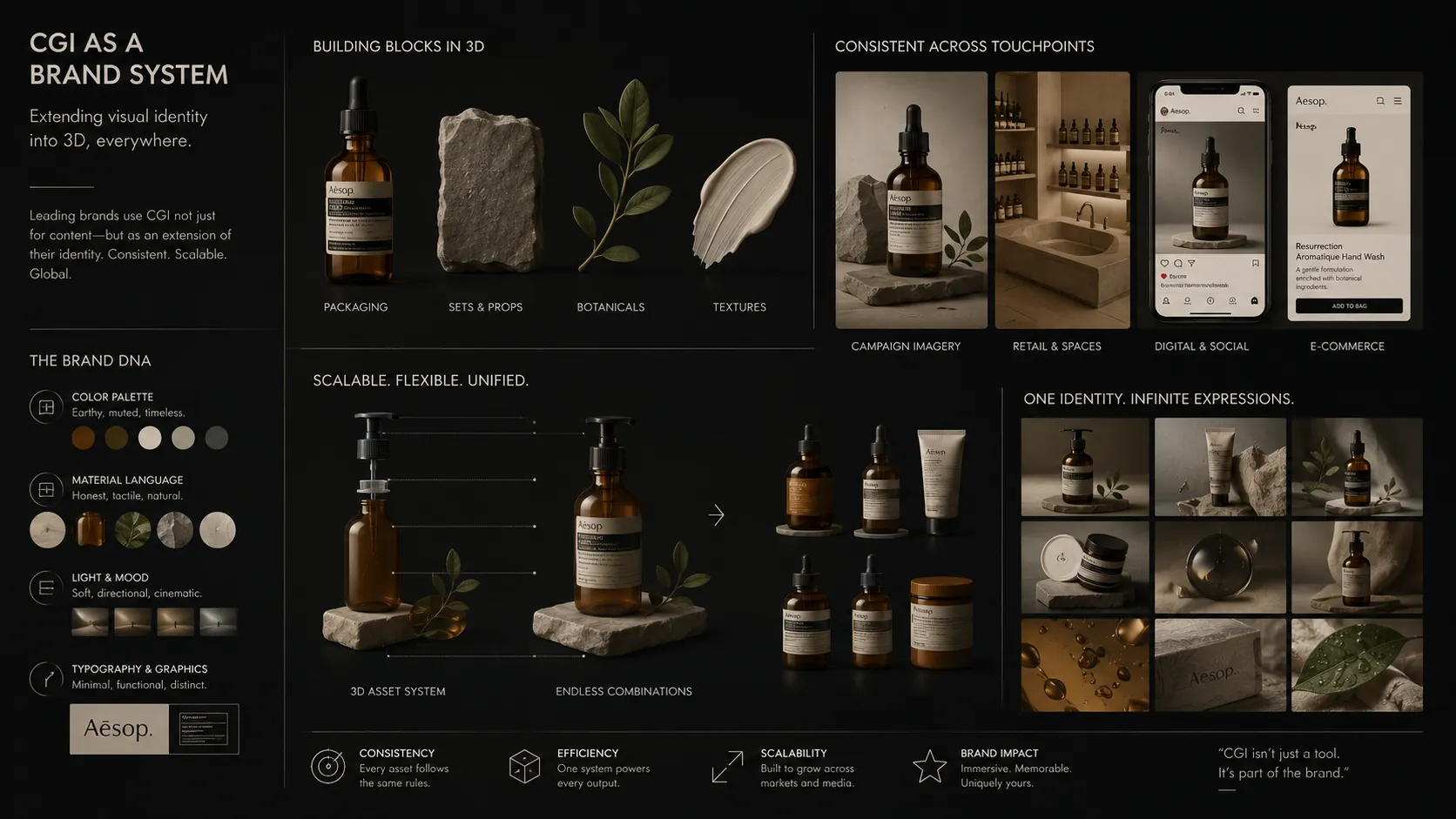
One 3D Model, Infinite Brand Visual Consistency

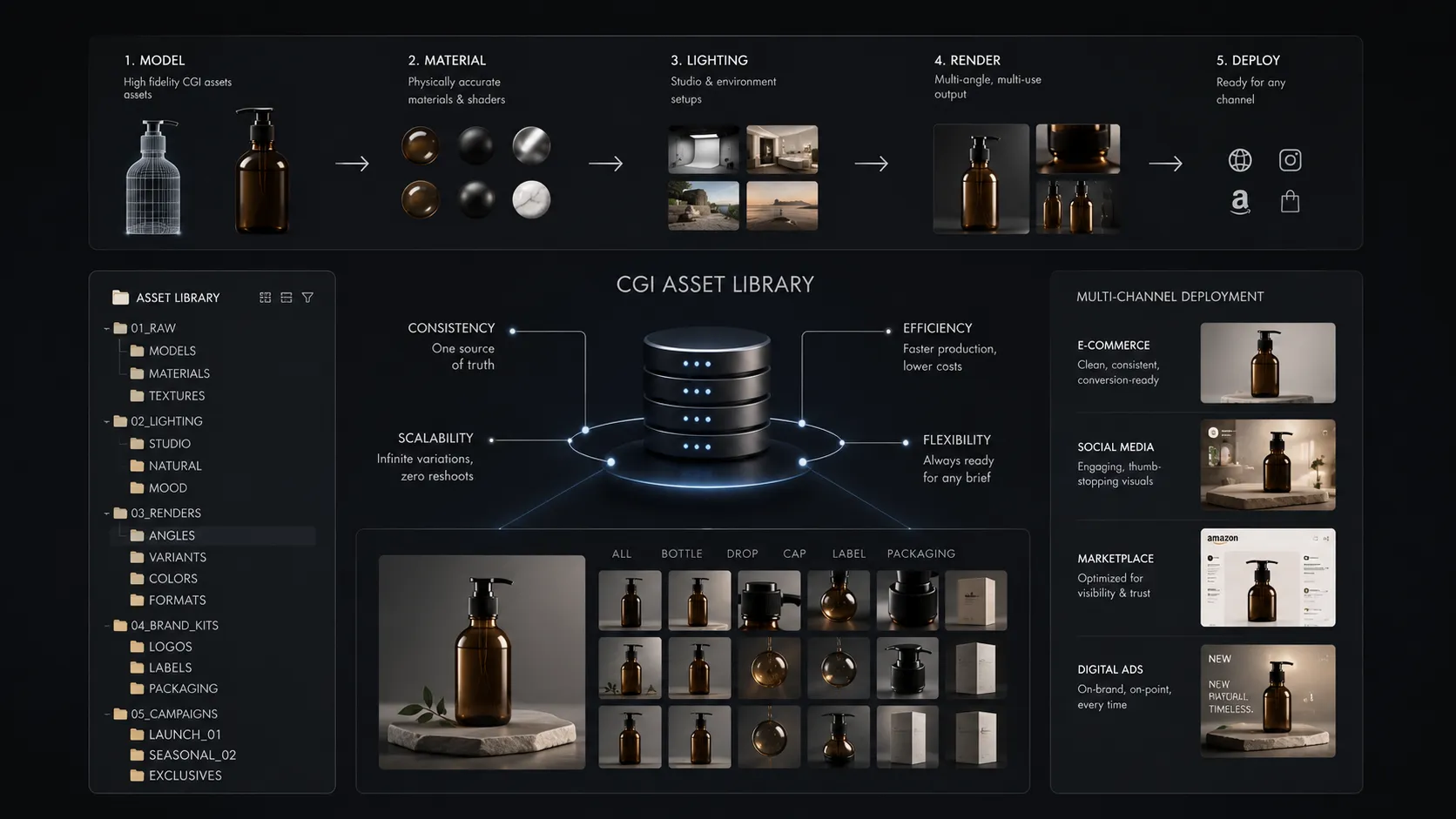
Visual inconsistency is one of the most commercially damaging problems a brand can have, and one of the most common. Product images shot across different dates, different studios, different lighting conditions, and different photographers look different from each other even when the physical product is identical. The packaging reads darker in one image and lighter in another. The surface finish appears glossy in one season's catalogue and semi-matte in the next. The colour temperature of the hero image does not match the colour temperature of the e-commerce tile, and neither matches the paid social banner. These inconsistencies are often invisible to the team that produced them because each image was evaluated in isolation. They are immediately visible to any customer encountering the brand across multiple touchpoints in a single browsing session, because they signal disorganisation. And disorganisation signals unreliability. For a premium brand, the perception cost of visual inconsistency is measurable in conversion rate and average order value. CGI solves this problem not by managing it better but by eliminating its structural cause.

3d animation CGI food and beverage render of a glass drink bottle with a dynamic water splash in a concrete interior
CGI in Food & Beverage Advertising: Perfect Shots

Food and beverage advertising has historically been one of the most technically demanding production disciplines in commercial imagery. Making a hamburger look appetising under studio lights requires hours of manual food styling using techniques that often involve replacing food with inedible substitutes. Making a glass of cola look refreshing requires replacing the actual liquid with a more photogenic alternative, freezing the ice to prevent melting under hot lights, and timing a pour with frame-perfect precision using specialised equipment. Making a chocolate bar look luxurious means sourcing a blemish-free display piece, controlling ambient temperature throughout the shoot, and completing every frame before the surface begins to lose its gloss under studio heat. CGI eliminates every one of these problems, and replaces them with something better: total creative control over every physical property of the product and its environment.

CGI automotive render of a silver electric SUV parked at a clifftop modern villa overlooking the sea
CGI Automotive Advertising for Car Brands

The modern automotive advertising campaign is built inside a computer to a greater extent than most viewers realise. Not because car brands lack the budget for location shoots, but because CGI gives them something that even the most ambitious location production cannot: total control over every element of the frame, the ability to show vehicles that do not yet exist physically, and the capacity to produce global campaign assets without shipping a physical car to five continents.

CGI luxury skeleton watch beside a tablet showing its 3D model, with a design sketch and loupe on a desk
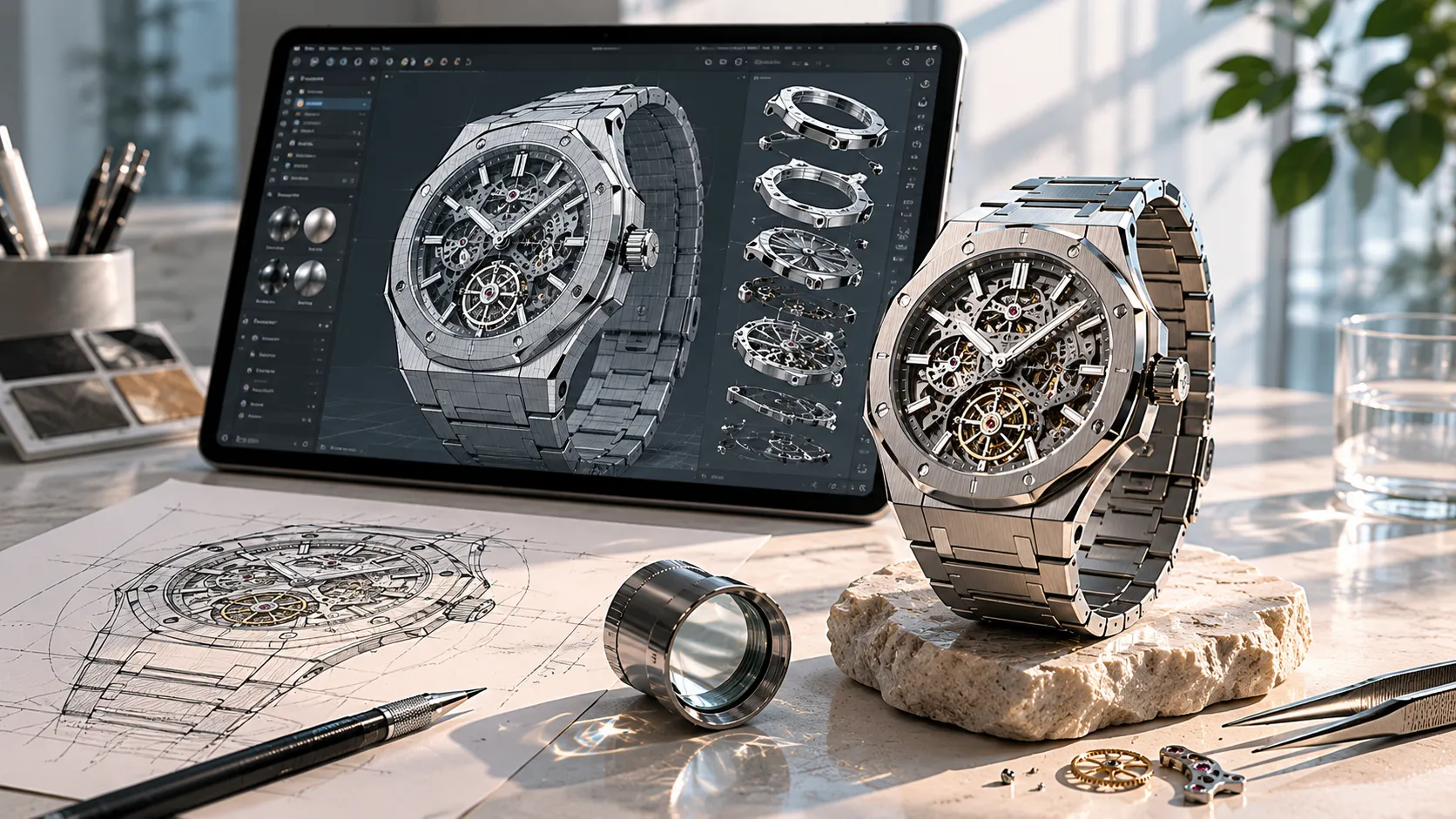
CGI for Jewelry & Luxury Watches: Going Fully Digital

Jewelry and watchmaking present the most technically demanding brief in all of product advertising. The task is to render objects whose entire commercial value depends on the viewer believing they are looking at real metal, real gemstones, and real light interaction. A diamond that does not sparkle correctly reads as paste. A sapphire dial that flattens under incorrect light reads as painted plastic. A brushed titanium case that loses its anisotropic reflection reads as matte grey. The margin for error is essentially zero. This is precisely why the finest jewelry and watchmaking houses have adopted CGI not as a compromise but as a superior production method to photography at the most demanding end of the category.

CGI studio scene of designers reviewing a perfume bottle render on screen, surrounded by brand visual references
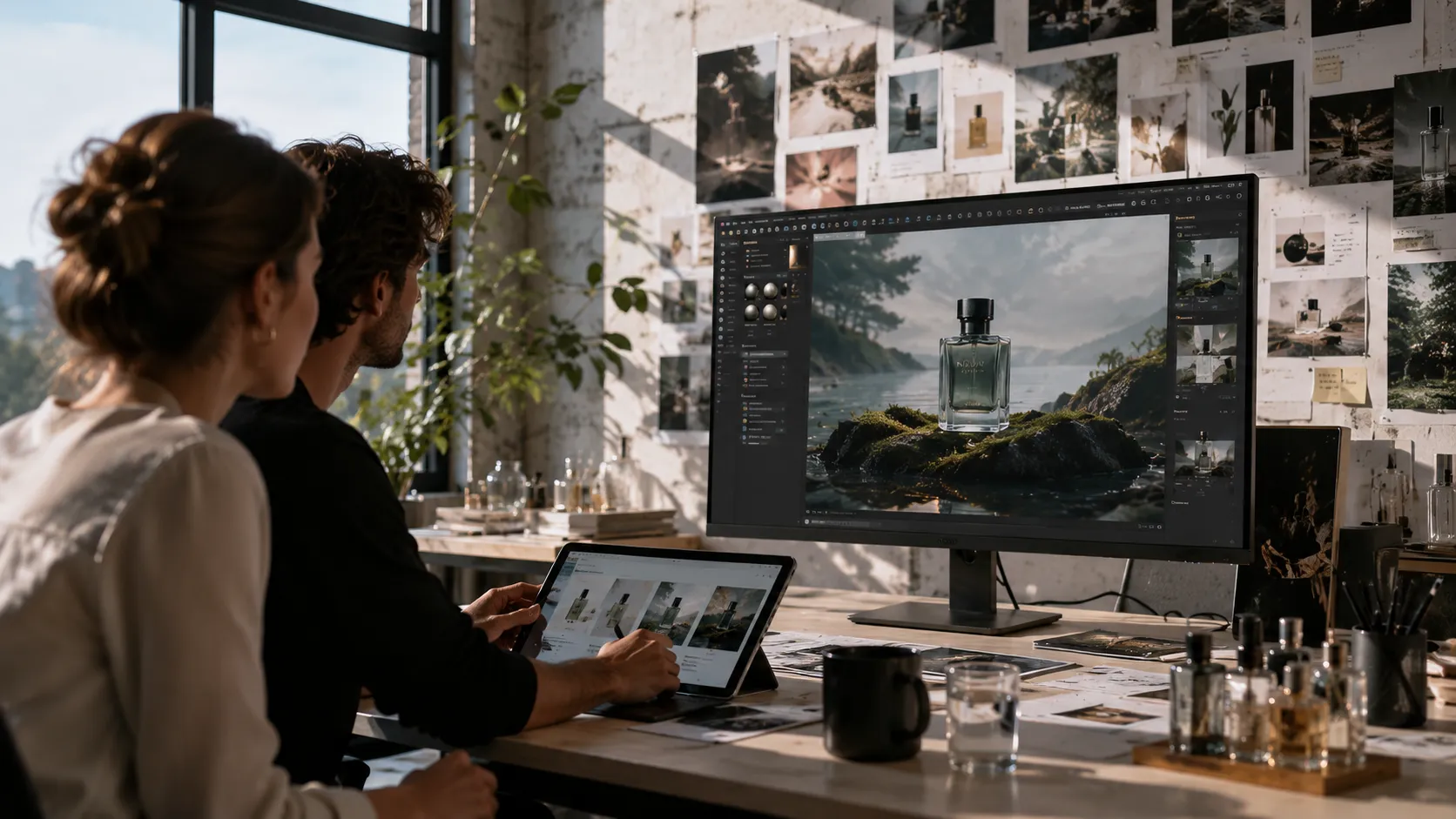
Brand DNA in Motion: How CGI Brings Identity to Life

Every brand has a DNA: a set of values, aesthetics, associations, and emotional registers that make it distinctively itself. The challenge of marketing is translating that DNA into sensory experiences that communicate it to the right audience at the right moment. For brands operating primarily in digital channels, that challenge is almost entirely visual. CGI is uniquely capable of expressing brand DNA because it operates outside the constraints of physical reality. It does not show the world as it is. It shows the world as the brand imagines it

CGI render of a black-and-gold luxury perfume bottle on marble in soft daylight, a premium 3D product visual
The Business Case for CGI in 3D Video Advertising

The decision to invest in CGI video production is, ultimately, a financial one. Creative ambition matters. Brand positioning matters. But the budget conversation requires numbers, and the numbers around CGI and video advertising in 2026 make a compelling case. This article assembles the most relevant performance data from across video advertising, CGI production, and brand marketing research to give brand managers and CMOs a clear picture of what a CGI investment actually returns.

Premium CGI render of a frosted glass skincare bottle with a gold cap on a marble plinth in a gold-lit interior
How CGI Animation Attracts Premium Clients

The brands most worth working with, the ones with the budgets, the creative ambition, and the long-term partnership potential, do not find their production partners through cold outreach alone. They find them through the quality of the work those partners put into the world. If you want to attract premium clients, you must first produce premium content that premium clients can find. CGI is the most powerful tool available for creating the kind of visual output that makes premium clients reach out to you.

3d CGI animation render of a titanium smartwatch shown from three angles, signalling premium brand status
Visual Prestige: How CGI Signals Brand Status

There is a version of a product that costs $12, and a version of the same product with the same formula and the same functional performance that costs $120. The difference is not primarily the ingredient list. It is the entire system of signals the brand sends before, during, and after purchase: the packaging design, the store environment, the typography, the photography, and in 2026, the CGI. Visual quality is not decoration. It is pricing infrastructure. The brands that understand this invest in CGI not to make their products look good, but to make them look worth what they cost.

CGI visual animation render of a black wireless earbud hovering over a water splash — a scroll-stopping social media product visual
Stop the Scroll: Why CGI Video Wins on Social Media

The average social media user in 2026 scrolls through the equivalent of 300 feet of content every single day. Attention is not just scarce. It is the only currency that actually matters in digital advertising. Everything else, reach, impressions, targeting precision, is irrelevant if your content does not stop the thumb. CGI video stops the thumb. Here is why, and what the data says about what happens next

Side-by-side CGI comparison of a serum bottle rendered in low-quality versus premium CGI
How to Choose a CGI Studio: A Brand Manager's Guide

Choosing the wrong CGI studio is expensive in ways that extend beyond the production invoice. A mediocre CGI campaign damages brand perception. It signals to your audience that visual quality is not a priority. It produces assets that cannot be used across your full distribution ecosystem. And it typically requires expensive remedial work either corrections from the original studio or commissioning the work again from a different partner. This guide gives brand managers, marketing directors, and creative leads a practical framework for evaluating and selecting the right CGI studio for a premium campaign

Exploded 3D product animation of an automatic wristwatch showing the crystal, dial, movement and case separated
3D Product Animation for E-Commerce: Boost Conversions

The single most significant challenge in e-commerce is the gap between what a product looks like on a screen and what a customer expects it to look like in person. This gap drives return rates, reduces conversion, and erodes brand trust. Three-dimensional product animation is one of the most effective tools available for closing it.

AI Video Tools in Advertising: What Brands Need in 2026

The arrival of capable AI video generation tools has prompted a version of the same question in every marketing department and agency: does this replace CGI? Should we be using Runway instead of commissioning a 3D studio? Is it possible to produce premium brand video for thousands less than traditional CGI using Kling or Veo? These are legitimate questions that deserve honest answers. This guide gives you a clear-eyed view of what AI video tools can and cannot do for brand advertising in 2026, and where they fit alongside traditional CGI production

CGI fragrance advertising render of a rose-gold perfume bottle amid swirling liquid and golden particles
CGI Fragrance Advertising: Perfume Brands & 3D Motion

Of all the product categories in advertising, fragrance presents the most extreme creative challenge. A perfume cannot be smelled through a screen. It cannot be touched, tasted, or physically experienced in any way through the medium in which it is being sold. Everything the brand communicates about what the product feels like; its warmth, its freshness, its depth, its luxury must be achieved entirely through visual language This is precisely why CGI has become the dominant production method for fragrance advertising at the premium and luxury end of the market.

CGI 3D billboard of a giant pink perfume bottle on a New York building, a DOOH out-of-home advertising visual
3D Billboard Advertising: How DOOH Stops Traffic

There is a reason the 3D billboard in Tokyo's Shinjuku district draws crowds of spectators every evening between six and nine in the morning. The giant animated cat has become an unofficial landmark, drawing people specifically to watch an advertisement. That is the power of DOOH digital out-of-home advertising executed at the highest level of CGI craft.

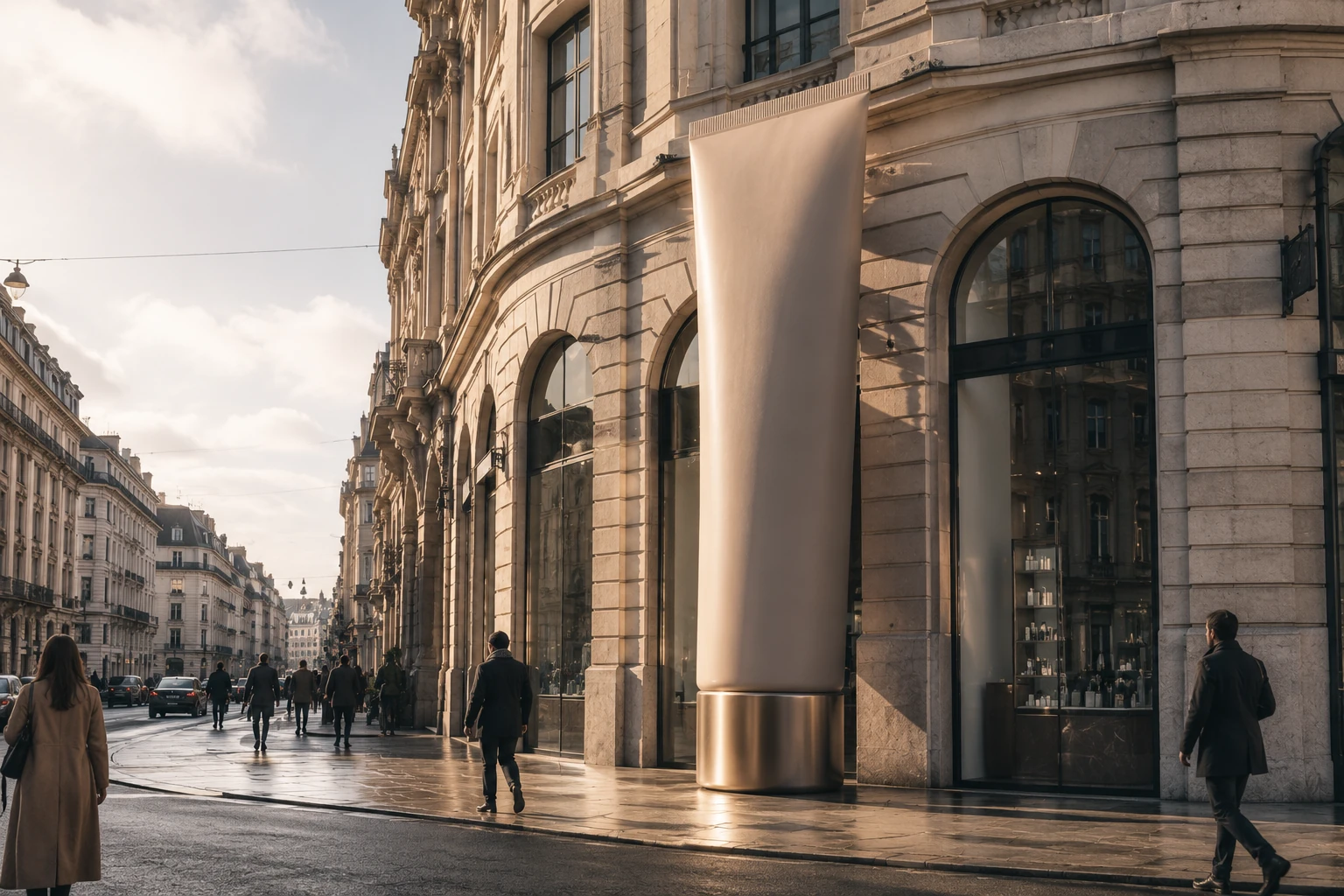
Giant CGI animation lip balm jar staged on a Paris street as a FOOH-style beauty advertising visual
CGI Beauty Advertising for Skincare & Cosmetics Brands

The beauty industry is one of the most visually demanding categories in advertising. Consumers judge a skincare product before they read a single ingredient. A mascara needs to look buildable. A serum needs to look potent. A lip gloss needs to look irresistible. For decades, achieving these visuals meant expensive studio shoots with specialist beauty photographers, controlled lighting, and hours of retouching. CGI has fundamentally changed this equation.

Split image comparing a live-action film studio shoot with a CGI perfume bottle render on screen
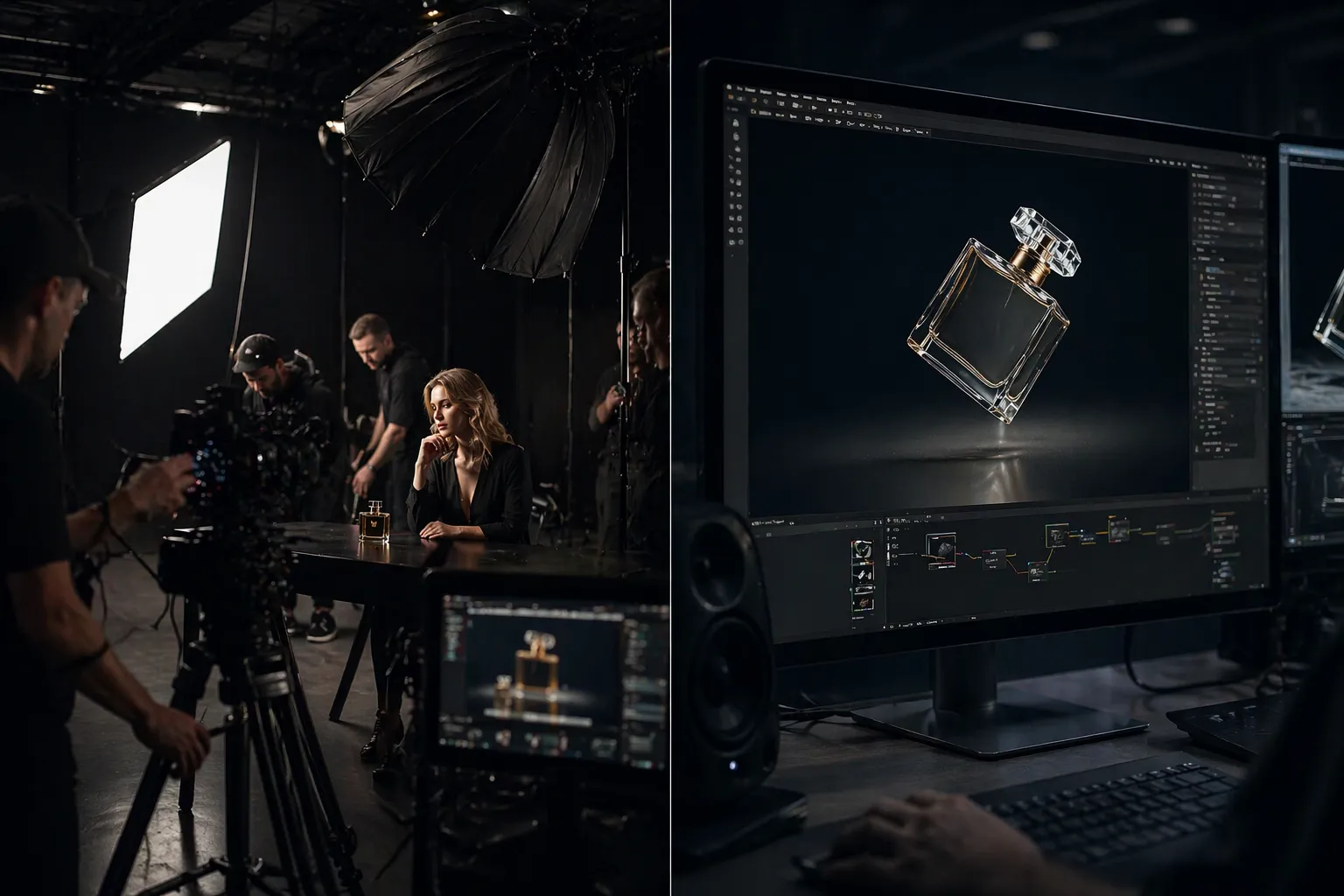
CGI vs Live Action: Which Is Right for Your Brand Campaign?

One of the most common strategic questions facing brand marketers and creative directors in 2026 is whether to commission a live-action shoot or a CGI production for a campaign. Both approaches have genuine strengths. The right answer depends on the nature of the product, the campaign goals, the timeline, and the budget available. This guide gives you an honest, practical framework for making the decision.

FOOH advertising visual of a giant CGI perfume bottle composited onto a rainy Paris street by the Eiffel Tower
What Is FOOH Advertising & Why Brands Need It in 2026

You have almost certainly seen one without knowing what it was called. A giant mascara wand sweeping across the London Underground. A luxury handbag the size of a bus rolling through the streets of Paris. A perfume bottle rising from the ocean beside a coastal skyline. These videos feel real for just long enough to make you question your perception and then you share them. That is FOOH advertising at work.

CGI production visual of a giant lip balm jar shown half as wireframe and half fully rendered on a city street
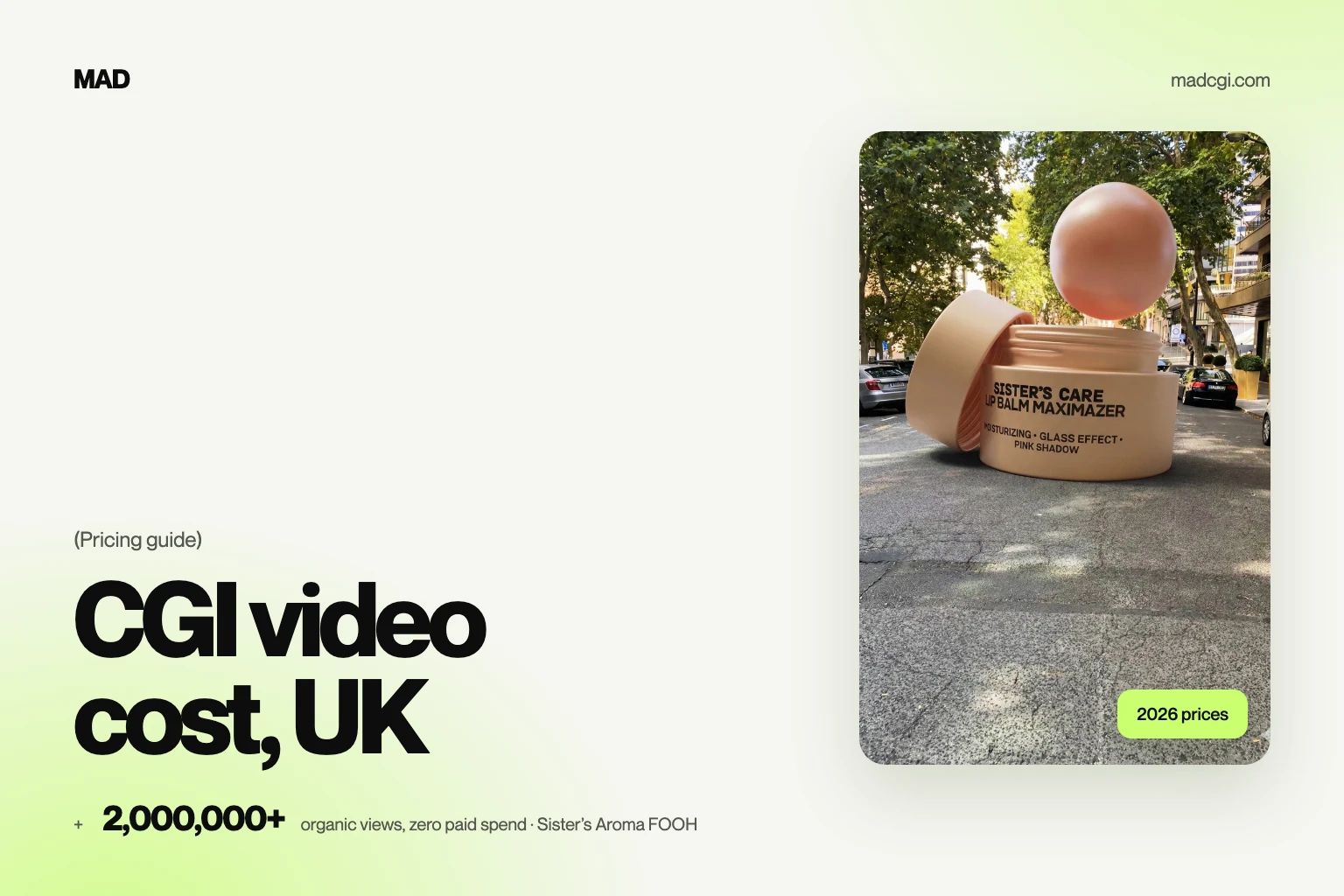
How Much Does CGI Advertising Cost in 2026?

Whether you are a marketing director at a global skincare brand or a creative lead at a fashion agency, at some point the question becomes unavoidable: how much does CGI advertising actually cost? The answer depends on several variables, but this guide will give you a clear, realistic breakdown of what brands are investing in CGI video production today and what drives prices up or down.

MAD CGI studio lounge with a glowing green MAD logo sign, leather sofas and plants
How to Build a CGI Video: From Brief to Final Render

How a professional CGI video is made, stage by stage, from brief and 3D modelling to animation and final render, and what your brand needs to prepare.

Contact

Ready to start? Fill out the brief below and our team will get back to you shortly.

Contact Us